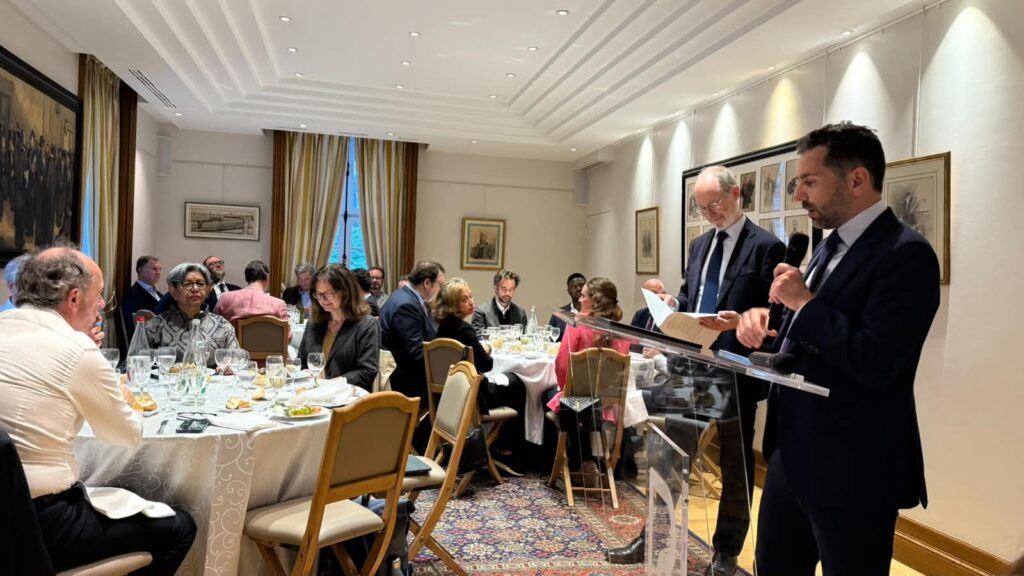
On Wednesday, 3 July 2026, the Association Française d’Arbitrage (“AFA”) hosted a dinner-debate at the Maison du Barreau in Paris, dedicated to a comparison of recent reforms to arbitration law in France and England. The evening brought together two exceptional speakers: Professor Jérémy Jourdan-Marques, Professor at the Université Lumière Lyon 2, author of a thesis on state review of international arbitral awards and a regular contributor to Dalloz Actualité, and Jacob Grierson, Barrister at Anima Dispute Resolution, Emeritus Member of the ICC Court Council and Chair of the Users’ Council of the CIMAC. Paris Baby Arbitration was pleased to be represented. Here are the moments that stood out from a particularly rich evening.
The scene was set from the outset. A few days after PSG had lifted the Champions League trophy at Arsenal’s expense, the debate opened in the spirit of a sporting rematch, with both speakers matching each other blow for blow in wit and good humour.
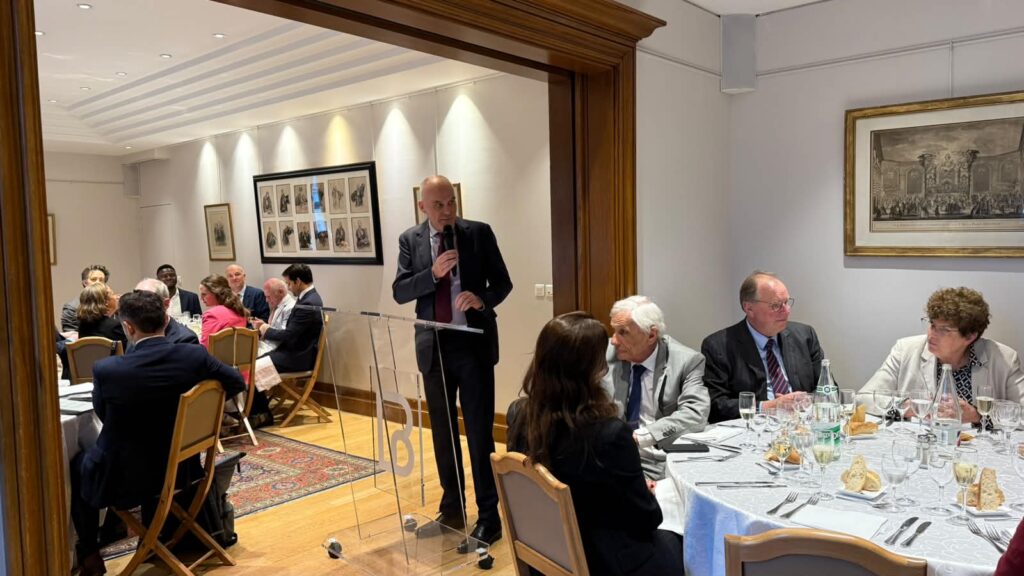
It was Professor Jourdan-Marques who opened hostilities, taking aim at the myth of common law superiority in arbitration. He noted that the Legal Origins Theory, popularised notably through the World Bank’s Doing Business reports, is today regarded as pseudoscientific — with the World Bank itself having discontinued the index in 2021. Jacob Grierson responded by defending England’s attractiveness as a seat: Queen Mary University of London surveys consistently rank London among the most preferred arbitral seats, and the English system offers, in his view, undeniable advantages — stare decisis, commercially minded judges, predictability and legal certainty.
The debate then turned to conflicts of interest. Professor Jourdan-Marques highlighted the shortcomings of disclosure obligations under English law, as illustrated by Halliburton v Chubb. He also lamented the absence of clear definitions in the revised Arbitration Act 1996, particularly regarding international public policy. Jacob Grierson sought to temper these criticisms: in his view, these concepts have given rise to only three decisions in English law — among them Soleimany v Soleimany [1998] QB 785, concerning the enforcement of an illegal contract, and Payward Inc and ors v Chechetkin [2023] EWHC 1780, in which consumer protection under the Consumer Rights Act 2015 was raised against a cryptoasset platform — demonstrating how rarely these issues arise in practice.
Jacob Grierson then turned to the question of the review of corruption, citing the French cases of Sorelec and Belokon. He raised a fundamental issue: does reopening proceedings before the national judge genuinely improve the detection of corruption, or does it simply second-guess the arbitrator, who is often better placed to assess such issues? He further argued that challenge proceedings are resolved more swiftly in England, making a case for the efficiency of the English system.
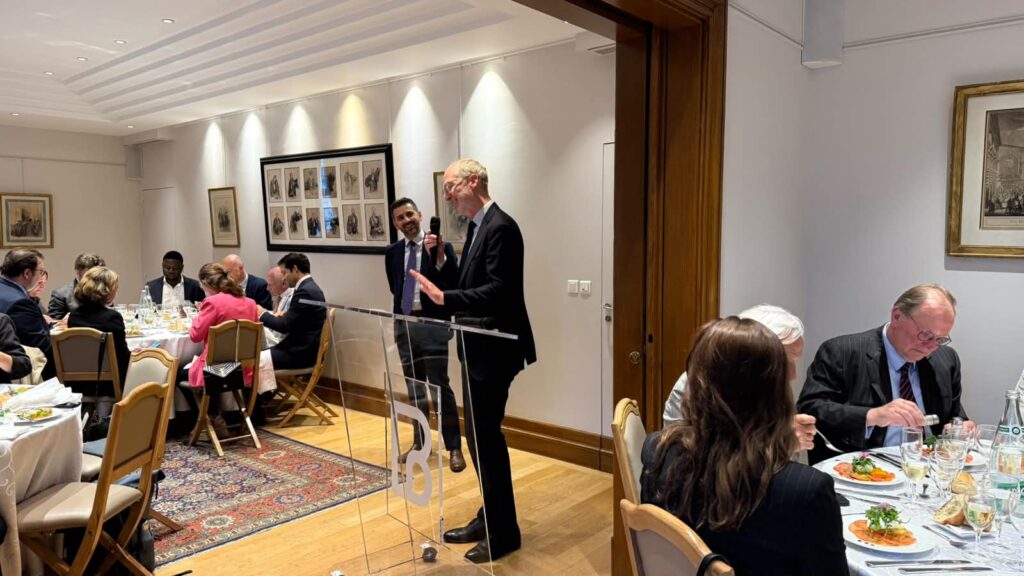
Professor Jourdan-Marques counter-attacked on the question of the law applicable to arbitration agreements. He observed that the approach adopted in Enka v Chubb in two thousand and twenty, subsequently amended following recommendations from the Law Reform Commission, had introduced instability harmful to legal certainty. By contrast, the French rule established in Dalico has remained unchanged for thirty-three years.
Jacob Grierson then levelled a pointed critique at the draft French arbitration code: Article 41, dealing with peremptory orders, is in his view an imperfect transposition of section forty-one of the Arbitration Act 1996. Whereas the English court has a general power to enforce any order made by a tribunal, the French text would confine the supporting judge’s jurisdiction to emergency orders alone.
Professor Jourdan-Marques closed with a comparison on costs: while arbitration proceedings can reach ninety thousand pounds sterling in England, the French system offers equivalent procedures for two hundred euros. He also criticised the immunity of arbitrators as enshrined in English law. The evening ended in an atmosphere every bit as enticing as the dinner — which led Jacob Grierson to concede, with characteristic fair play, that on that particular playing field at least, the result was never really in doubt.
The views expressed in this article do not necessarily reflect the views of the author or the speakers.